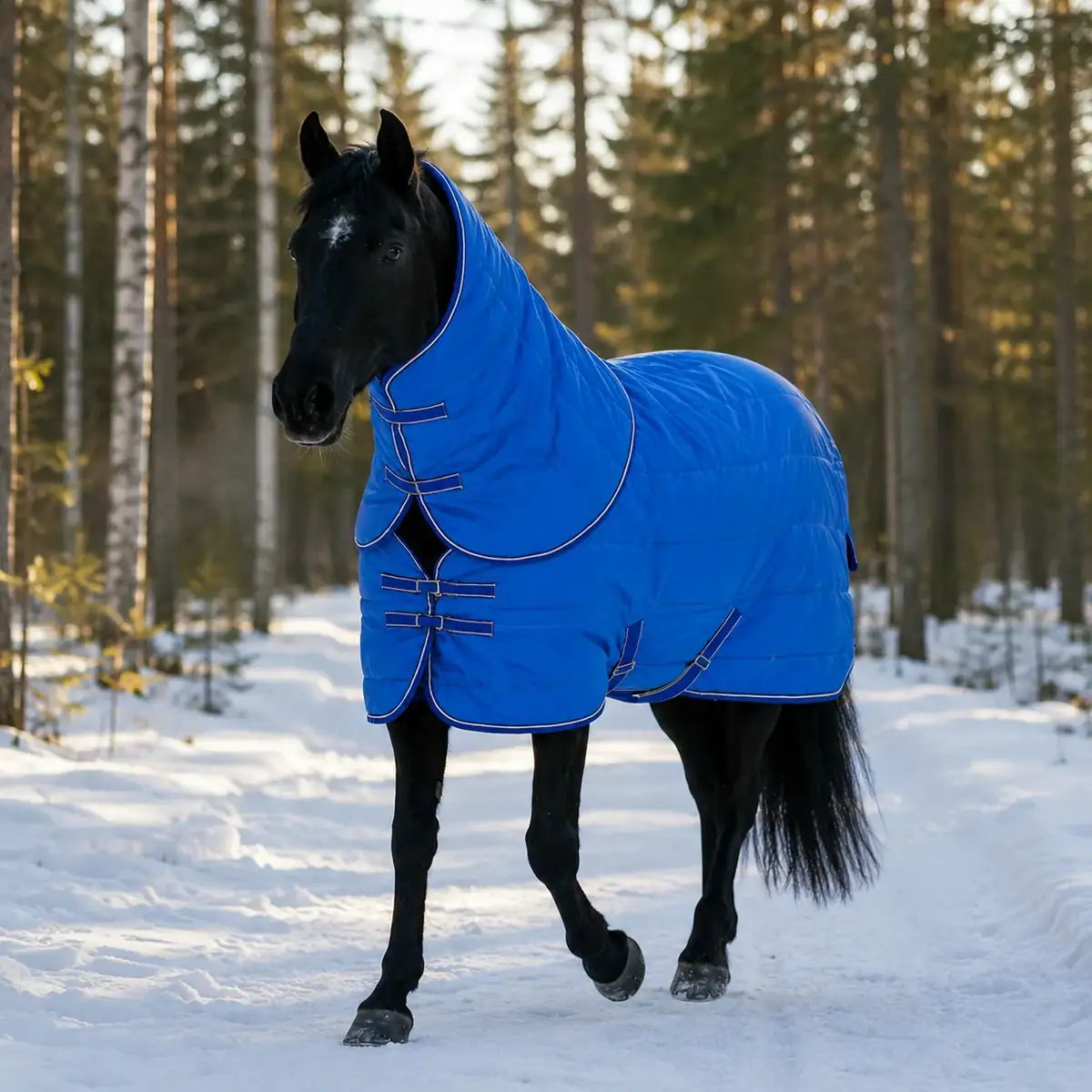
Horse rugs: need, weight and fit
Does my horse need a rug?
There is no universal answer. Coat and clipping, age, body condition, health, shelter, wind, rain and management all matter. Check the individual horse regularly and ask a veterinarian when health or welfare is involved.
What weight rug should a horse wear?
Fill weight describes insulation, not a complete temperature prescription. A 0g sheet, 100g lightweight, 200g mediumweight and 300g-plus heavyweight must still be considered alongside the horse, weather, shelter and whether the horse is clipped.
How do I measure a horse for a rug or blanket?
A common method measures from the centre of the chest, around the shoulder and along the body to the point of the buttock. Always follow the size system and fit guidance of the specific brand.
How should a horse rug fit?
It should sit securely without restricting the shoulder or pulling at the withers, chest or neck. Check depth, tail position, surcingles and straps, then look for slipping, pressure or rubbing during use.
What is the difference between a turnout rug and a stable rug?
A turnout rug is designed for outdoor exposure and normally uses a weather-resistant outer construction. A stable rug is designed primarily for indoor warmth and should not be assumed to be waterproof.
Materials, waterproofing and care
Is 600D or 1200D better for a turnout rug?
Denier is only one material characteristic. Yarn, weave, fabric weight, coating, tear and tensile performance, lining, reinforcement and construction all influence suitability.
How can I tell whether a horse rug is waterproof?
Look for a clear product claim supported by an appropriate test method, and consider seams and construction as well as the outer fabric. Performance also depends on care, wear and the exact production material.
Can I wash a waterproof horse rug?
Follow the care label. Aggressive detergents, heat or unsuitable washing can affect coatings and water-repellent finishes. A rug may need professional cleaning or reproofing according to its construction.
Should I choose a standard neck, high neck or full neck?
Consider weather coverage, clipping, body shape, movement and the risk of pressure or rubbing. More coverage is not automatically better if the neck shape does not fit the horse.
Fly masks, leg protection and tack textiles
Can a horse see through a fly mask?
Purpose-designed mesh should allow visibility, but shape and fit are essential. The mesh should stay clear of the eyes and be checked daily for damage, dirt or displacement.
Do horse fly masks provide UV protection?
Some do, but a numerical UV claim should be supported by evidence for the actual material and construction. Owners should choose coverage according to the horse and professional advice.
Which horse boots should I use?
Brushing, tendon, fetlock, overreach and travel boots serve different purposes. The correct option depends on the activity and horse; fit, cleanliness, fastening and heat management remain important.
Can a thicker saddle pad correct saddle fit?
A pad changes the interface but cannot reliably correct an unsuitable saddle. Thickness and material should be chosen with the saddle, horse and discipline, with professional saddle-fit advice where needed.
What type of halter or headcollar is safest?
Safety depends on the task, material, fit, hardware and whether a breakaway feature is appropriate. A strong nylon or rope halter should not automatically be treated as safe for unattended turnout.