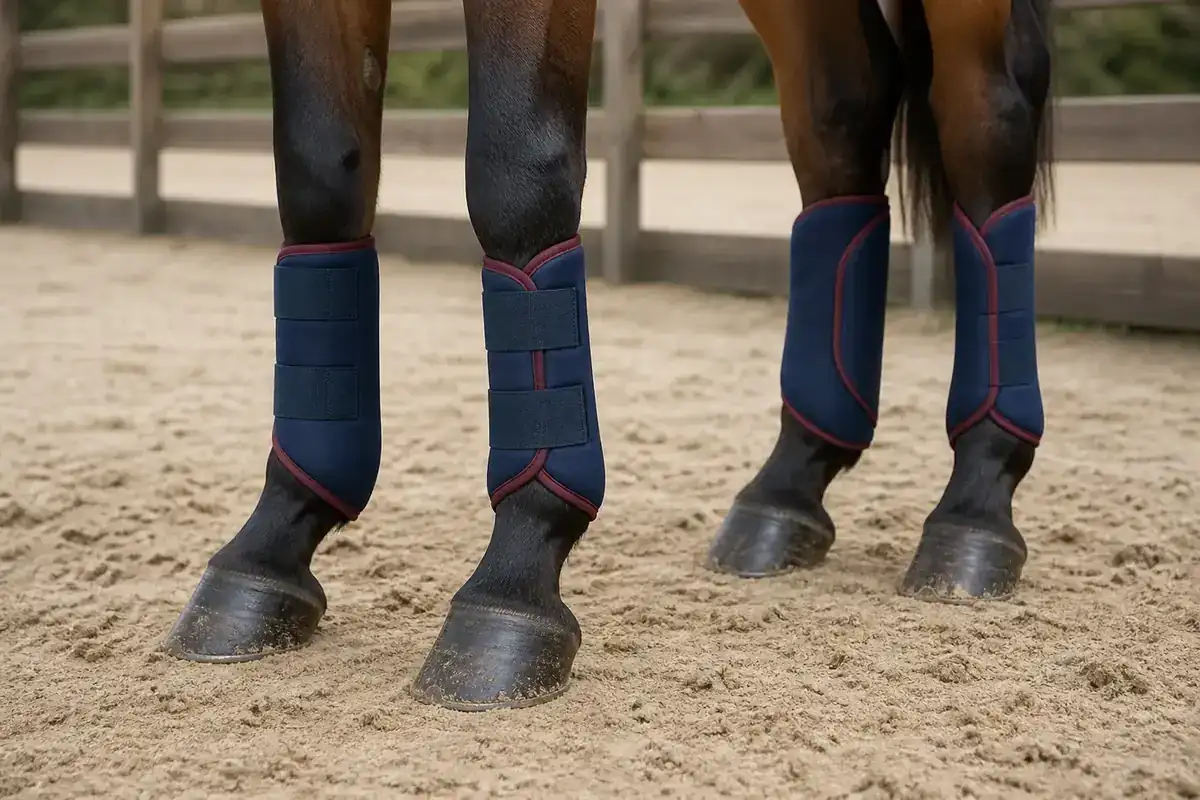
Define protection, movement and wearing time
Describe the activity, target protection zone, expected duration of wear and environment. A flexible brushing boot, moulded tendon boot, overreach boot and padded travel boot require different balances of coverage, flexibility, ventilation and fastening security.
A factory should translate that use case into a construction proposal and explain which points still require physical fit and riding evaluation.
Specify layers and edges, not only the outer material
Record shell or outer fabric, inner lining, foam or shock-absorbing layer, edge finish, reinforcement and fastening construction. Neoprene, mesh, fleece, synthetic leather and moulded materials all behave differently in heat, moisture, abrasion and cleaning.
Pay particular attention to hard edges, seam allowances, exposed hook material and transitions between rigid and soft zones.
Build sizing around the target horse population
Size names such as pony, cob and full are not complete specifications. Approve key dimensions, strap length and overlap, circumference ranges, left-right symmetry and the position of protective panels. Fit samples on representative horses and record movement, rotation, interference and pressure observations.
Inspect repeatable construction before shipment
Agree checks for dimensions, paired symmetry, closure attachment, stitch security, edge finish, lamination or bonding, logo position and cleanliness. If performance claims are required, define the relevant material or finished-product verification before marketing copy is written.
See the horse boots development page for representative product directions.
© 2026 Guangzhou Gugoo Pet Products Factory All rights reserved. This article may be linked to with attribution but may not be reproduced, translated, republished or used for commercial training without written permission.