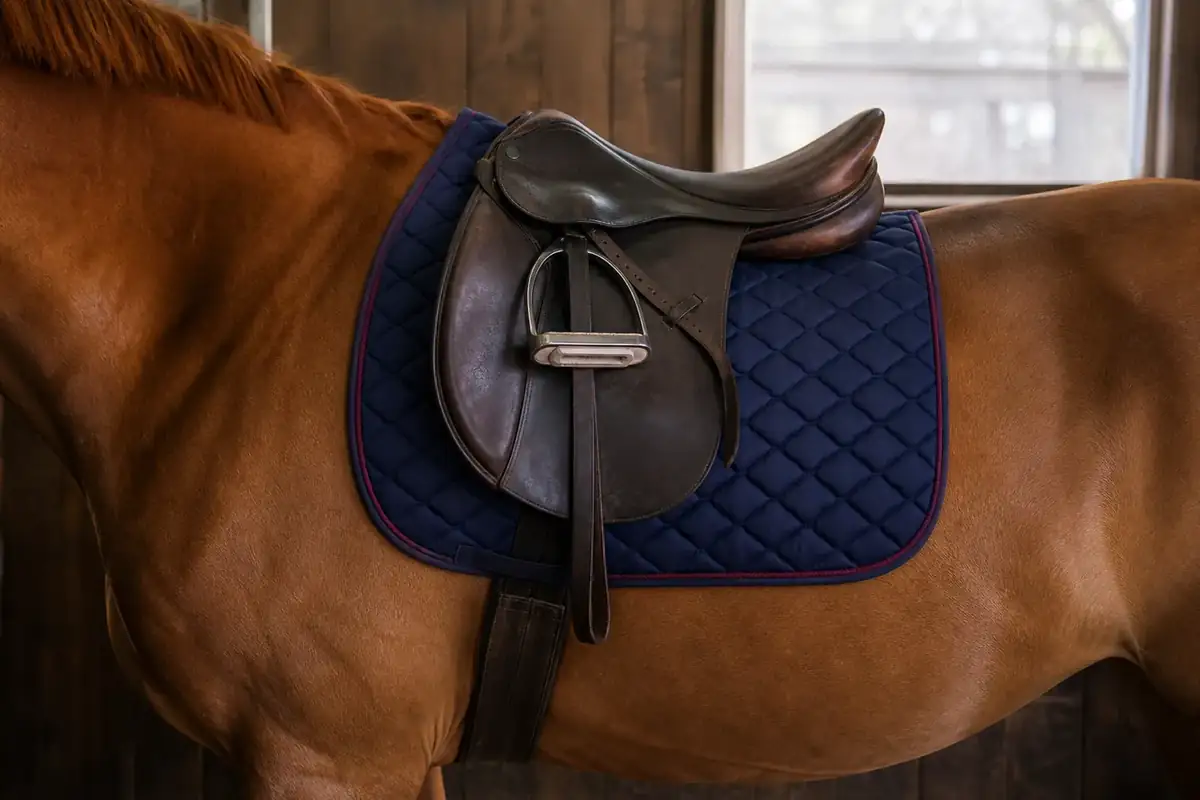
Define discipline, saddle shape and visual position
Start with intended discipline, saddle type, target horse, pad profile and retail position. Dressage, jumping and general-purpose silhouettes differ, while close-contact and correction concepts introduce other fit and material decisions.
Approve spine length, drop, wither profile, front and rear shape, girth-loop position and visible logo area on a dimensioned pattern.
Specify the full layer system
Record face fabric, fill or foam, stabilising layer, lining, binding and reinforcement. Quilting pattern and stitch density affect appearance and how the layers remain aligned. A soft hand feel alone does not establish moisture management, durability or suitability.
Where a performance claim matters, agree how the actual material or finished construction will be evaluated.
Control high-wear and high-visibility details
Inspect binding joins, spine finish, billet and girth-loop attachment, lower-edge distortion and abrasion-prone zones. Embroidery density, patch backing and logo position should not create unwanted stiffness or interfere with the saddle area.
Approve colour and branding against a physical sample
Digital colour references help communication, but face fabric, lining, binding and thread can reflect colour differently. Confirm the physical combination, wash-care label, size marking and packing presentation before bulk approval. View representative saddle pad and exercise textile directions.
© 2026 Guangzhou Gugoo Pet Products Factory All rights reserved. This article may be linked to with attribution but may not be reproduced, translated, republished or used for commercial training without written permission.