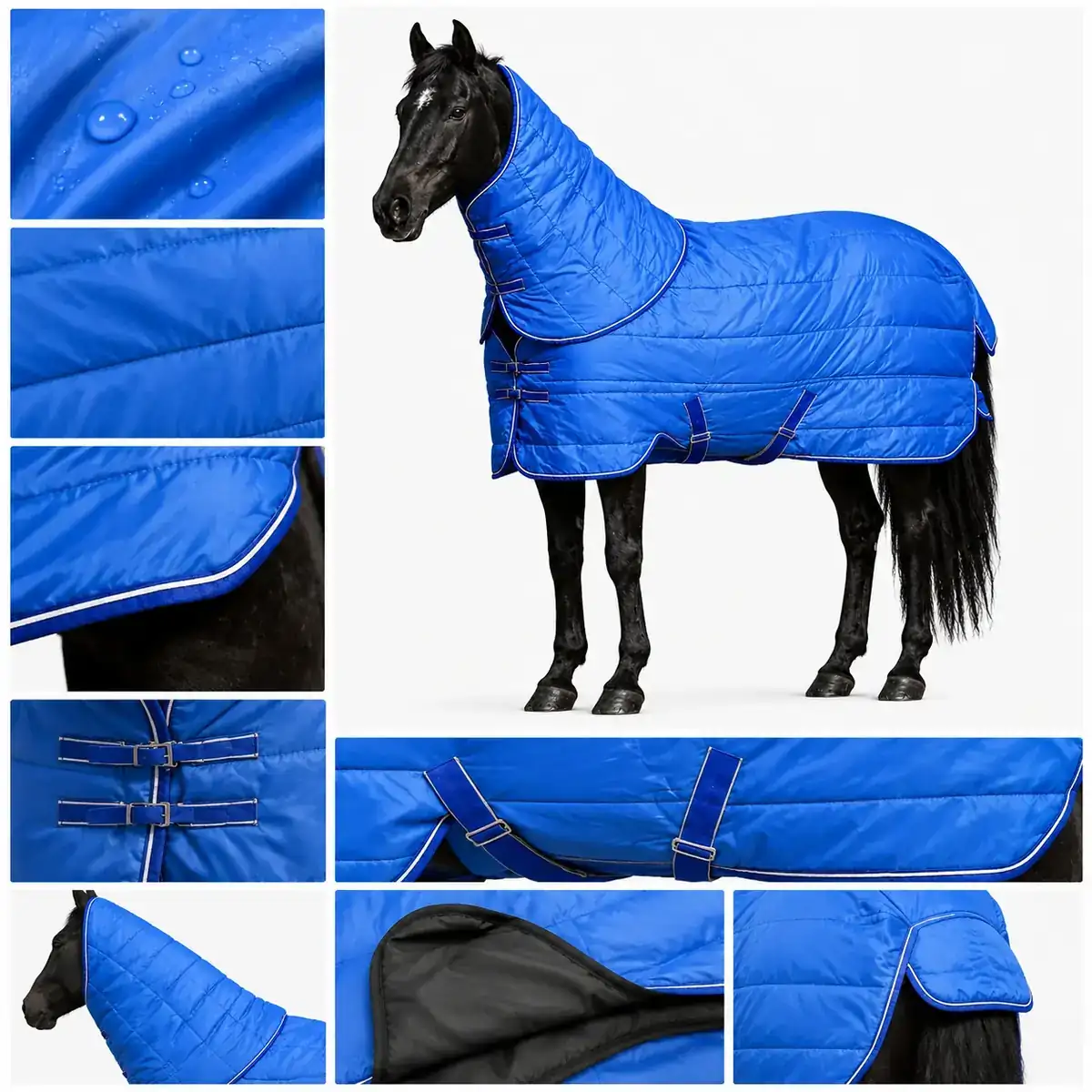
What 600D and 1200D actually describe
The “D” refers to denier, a measure related to yarn linear mass. In everyday buying language, 1200D is often treated as heavier or tougher than 600D. That can be directionally useful when other variables are comparable, but it is not a guarantee of finished-fabric strength.
Yarn type, filament structure, thread count, weave density and fabric weight influence how the textile behaves. A well-specified 600D fabric may be more suitable for a particular commercial programme than a poorly defined 1200D alternative.
Match the fabric to the use case
A lighter turnout direction may prioritise packability, flexibility and a particular price position. A heavier-duty direction may prioritise resistance to demanding outdoor use. The decision should consider the horse, environment, expected wear, owner behaviour and retail promise.
- Season and likely weather exposure
- Daily or occasional use
- Herd and turnout conditions
- Target retail level and warranty policy
- Care instructions and expected product life
Waterproofing is a system, not a denier number
The outer textile, coating or membrane, seam handling and overall construction work together. A buyer should state the required waterproof test method and target rather than relying only on the word “waterproof.” Breathability should also be specified through an agreed method if it is part of the product claim.
Test reports should be linked to the material or construction actually intended for production. A result from a different fabric does not automatically validate the final rug.
Ask about strength using agreed test language
Tear strength, tensile strength, abrasion resistance and coating adhesion describe different aspects of performance. Not every programme requires every test, but buyer and manufacturer should agree which risks matter.
State the fibre, nominal denier, weave, fabric weight or construction reference, coating, waterproof target, breathability target, colour, finish and relevant test methods.
Do not ignore lining, hardware and fit
A strong outer shell does not compensate for poorly selected lining, weak webbing, unsuitable buckles, inadequate reinforcement or a fit that creates unnecessary stress. Product durability comes from the interaction of materials and construction.
Inspect stress points around chest closures, surcingles, gussets, leg straps and tail details. Confirm the reinforcement method and compare it with the approved sample.
A practical buyer decision
Choose 600D or 1200D only after defining the market promise. If the range needs multiple levels, build a clear material ladder and keep product claims consistent with the approved specification and evidence.
During quotation, require suppliers to identify any material substitution. During sampling, confirm hand-feel, drape, appearance and construction. Before bulk production, approve the exact material reference and colour under suitable light.
© 2026 Guangzhou Gugoo Pet Products Factory All rights reserved. This article may be linked to with attribution but may not be reproduced, translated, republished or used for commercial training without written permission.