Start with a range architecture, not a mixed catalogue
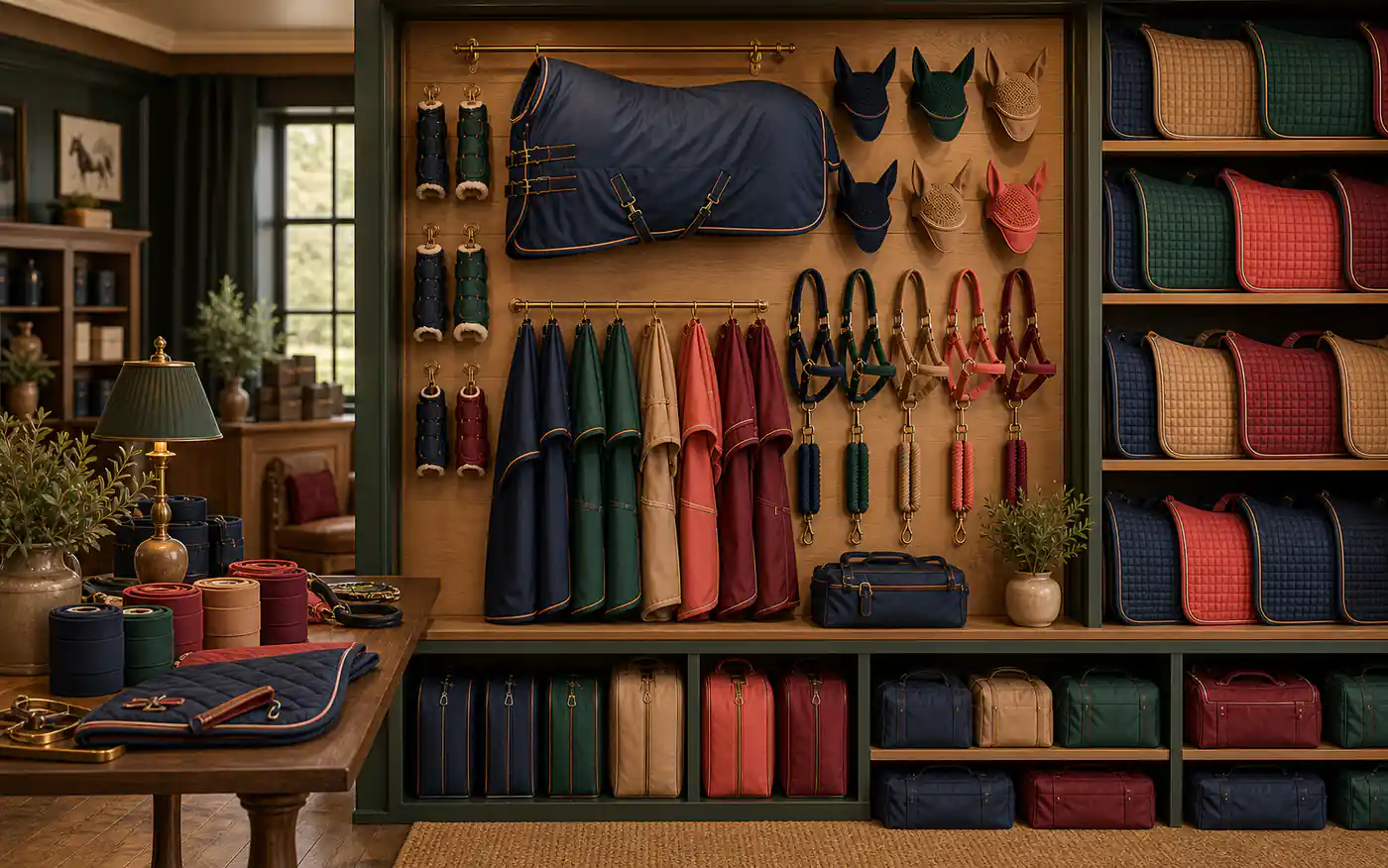
“Equestrian accessories” can include fly masks, horse boots, saddle pads, halters, lead ropes and storage bags. They may share colour, branding and packaging, but they do not share one construction logic. Begin by defining the intended customer, discipline, price position and role of every product in the range.
A manufacturer should help separate common decisions—colour standards, logo rules, packaging and approval records—from product-specific decisions such as eye clearance on a fly mask, impact zones on a boot or load points on a halter.
Build one visual family, but approve every product against its own use, fit and quality checklist.
Check category capability with product-level evidence
A broad factory claim is not enough. Ask for relevant sample-room records, material specifications and current production evidence for the exact categories being discussed. The important question is whether the team can explain why a mesh, foam, webbing, hardware or reinforcement is suitable for the intended product.
- Who controls patterns, sampling comments and revised approvals?
- How are trims and colour references shared across categories?
- Which critical measurements and workmanship points are checked?
- How are approved samples transferred to bulk production?
Use a component matrix to control complexity
Map every style against its main fabric, lining, foam or fill, webbing, binding, hardware, closure, branding and packaging. This reveals where components can be shared and where apparent similarity hides a different requirement.
Shared components can improve consistency and purchasing efficiency, but forced standardisation can weaken the product. A lead-rope snap, boot fastening and bag zip should each be chosen for its own task.
Approve the range in controlled stages
Start with representative development styles rather than opening too many samples at once. Confirm construction and fit first, then coordinate colours, labels and packaging. Record final dimensions, materials, artwork positions and inspection points in one approved specification per style.
Explore Gugoo's equestrian product families, compare colour directions in the virtual sample room, or send a structured project brief.
© 2026 Guangzhou Gugoo Pet Products Factory All rights reserved. This article may be linked to with attribution but may not be reproduced, translated, republished or used for commercial training without written permission.