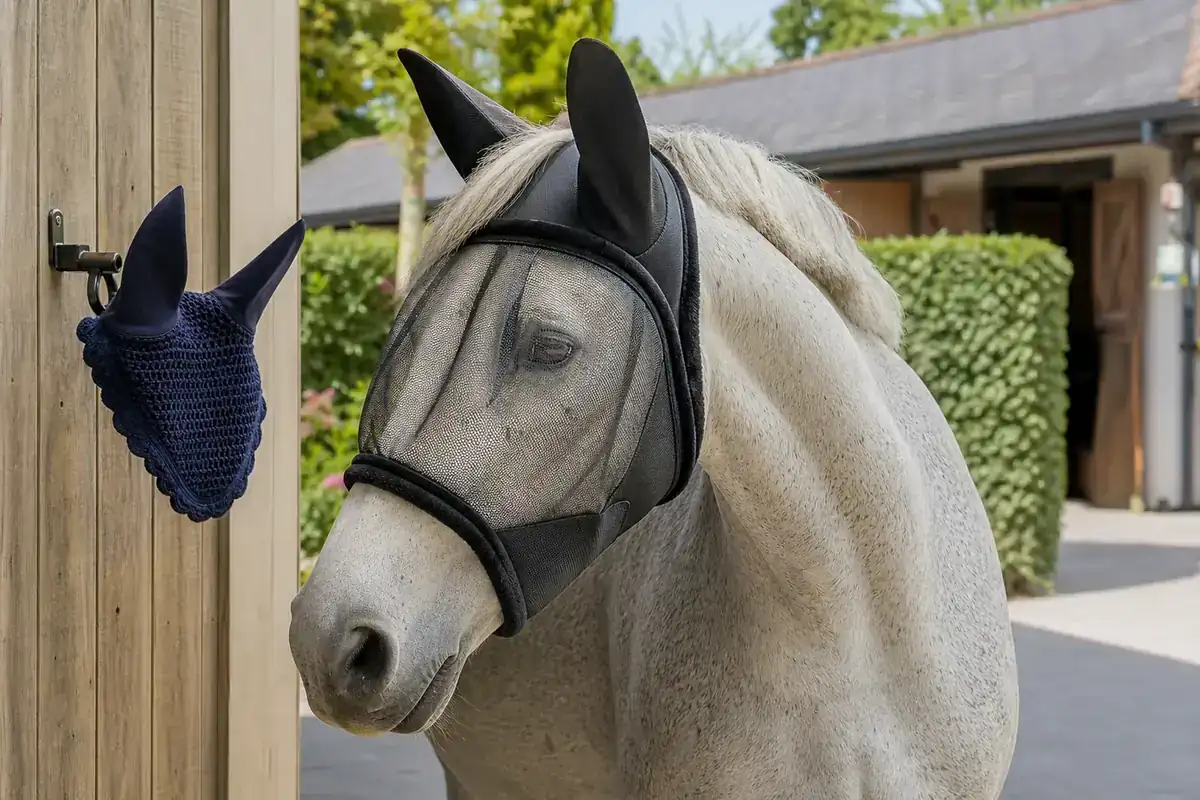
Start with the protection the horse actually needs
Fly masks are used to help keep insects away from the eyes and face. Some designs add ear or extended nose coverage, while some materials are offered with a UV-protection claim. The right format depends on the horse, turnout routine, insect pressure, climate and any advice from a veterinarian.
More coverage is not automatically better. It must remain comfortable, ventilated and appropriate for the horse's living conditions.
Keep the mesh clear of the eyes
The front structure should resist collapsing onto the eyelashes or eyes during normal wear. Check brow shape, darts, reinforcement, mesh stiffness and how the mask changes when the horse lowers its head or rubs.
The mask should stay secure without being excessively tight. Edges, seams and closures need to avoid sensitive areas and should be checked for rubbing, trapped dirt or hair loss.
Treat visibility, ventilation and UV as separate requirements
Mesh opening, colour, surface finish and shape can affect visibility and airflow. A material that looks dense in a product photograph should not be assumed to have a particular optical or ventilation performance.
Likewise, a numerical UV-blocking claim should be linked to test evidence for the actual material and, where relevant, the finished construction. A generic supplier statement should not be copied into brand marketing without verification.
Design closures for security and practical daily use
Hook-and-loop width, overlap, pull tabs and closure position affect how easily an owner can fit the mask and how well it stays in place. The design should consider different head shapes and the possibility of field contact or rubbing.
Owners should inspect the mask at least daily, confirm that it remains correctly positioned and remove it for cleaning or if it is damaged, wet, heavily soiled or causing irritation.
Turn consumer questions into a complete product brief
For OEM or private-label development, define size method, head-shape targets, eye clearance, mesh specification, trim, ear and nose coverage, closure construction, colour, logo, care instructions and any required material tests.
Fit-test the sample on representative horses and record the result. A useful range may need more than simple pony, cob and full labels if the target market includes distinct head shapes.
Horse-care reference: PetMD's veterinarian-reviewed fly-mask guidance highlights eye clearance, secure but comfortable fit, visibility and regular checking. Seek veterinary advice for eye conditions or individual medical needs.
© 2026 Guangzhou Gugoo Pet Products Factory All rights reserved. This article may be linked to with attribution but may not be reproduced, translated, republished or used for commercial training without written permission.