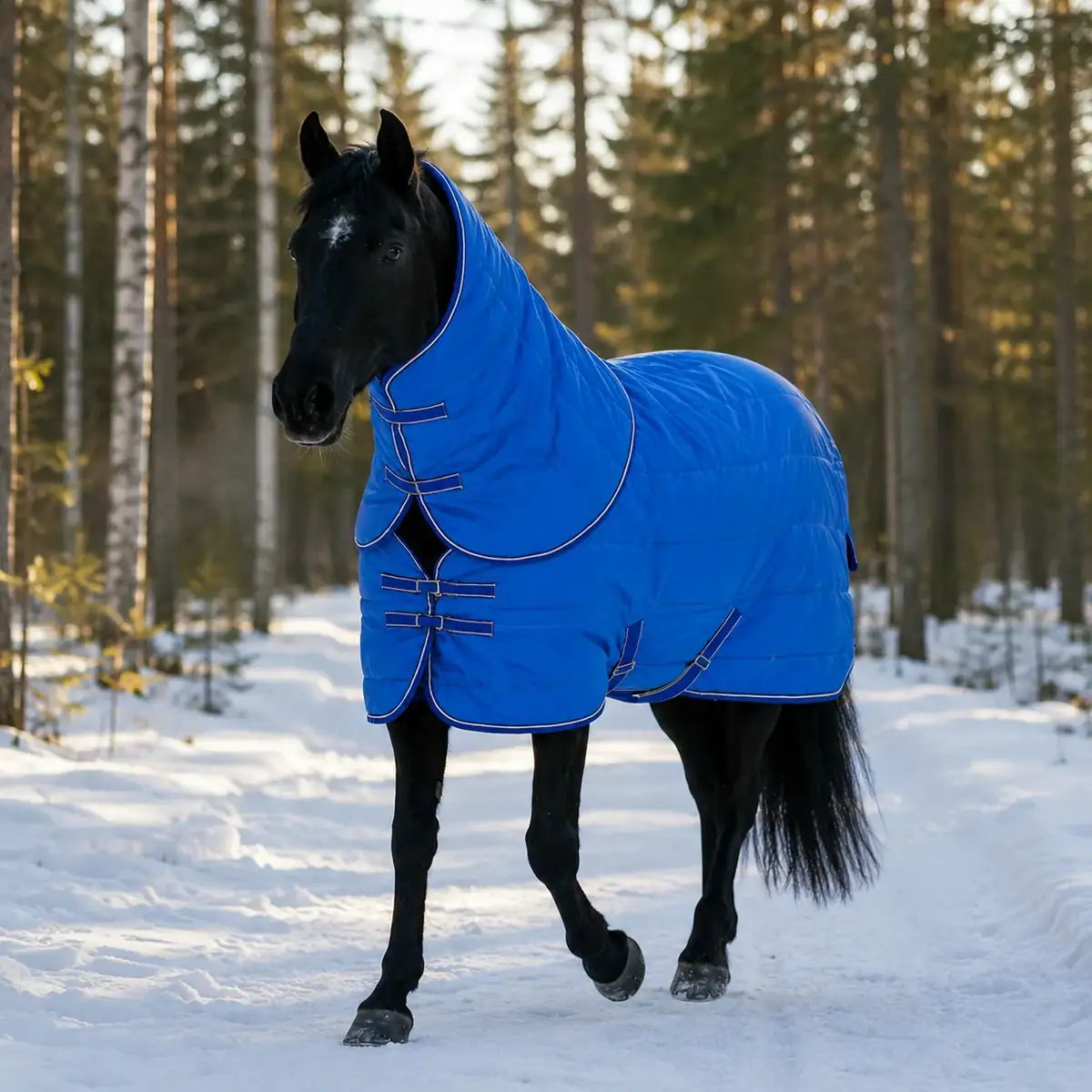
Separate fill weight from the total product description
In horse-rug language, 0g, 100g, 200g and 300g usually refer to the nominal weight of insulating fill per square metre. They do not describe the total finished weight of the rug, and they do not explain the outer fabric, lining, waterproof construction, breathability or fit.
A no-fill turnout sheet can still have a substantial shell and hardware. Two rugs with the same fill can feel and perform differently because their materials and construction are different.
Use the gram number as a range marker, not a temperature prescription
Retail language often groups 0g as a sheet, around 50–100g as lightweight, around 150–250g as mediumweight and 300g or more as heavyweight. Category names vary, so the actual fill should remain visible in the specification and consumer information.
No single chart is correct for every horse. A useful decision considers clipping, coat, breed and type, age, body condition, health, acclimatisation, activity, shelter, wind, rain, humidity and the way the horse is managed.
Check the horse instead of relying only on the forecast
Owners need to remove or open rugs regularly and check the horse's temperature, skin, condition and comfort. Sweating or dampness under an over-warm rug can create its own welfare problem. Weather can also change substantially between morning and afternoon.
Health concerns, older horses, poor body condition and unusual responses to cold or heat should be discussed with a veterinarian or qualified horse-care professional.
Build a retail range around clear use cases
A coherent range can separate rain protection, light transitional insulation, general winter use and heavier cold-weather options. Neck design, liner compatibility, shell performance and fit should be planned alongside the fill ladder.
A product name such as “mediumweight winter rug” should not replace the factual specification. State the nominal fill, shell construction, lining, neck format and intended use, and avoid universal temperature guarantees.
Specify fill so production and marketing say the same thing
The approved brief should identify fill material, nominal weight, distribution, quilting or stabilisation method, tolerance and how the finished product will be checked. Confirm whether different panels or detachable liners use different weights.
Marketing, labels and retailer training should match the approved production record. That prevents a broad word such as “heavyweight” from drifting away from the product actually made.
Horse-care reference: British Horse Society guidance and equine-care resources consistently treat rugging as an individual decision involving coat, clipping, health, weather and management. This article explains product terminology and is not a veterinary prescription.
© 2026 Guangzhou Gugoo Pet Products Factory All rights reserved. This article may be linked to with attribution but may not be reproduced, translated, republished or used for commercial training without written permission.