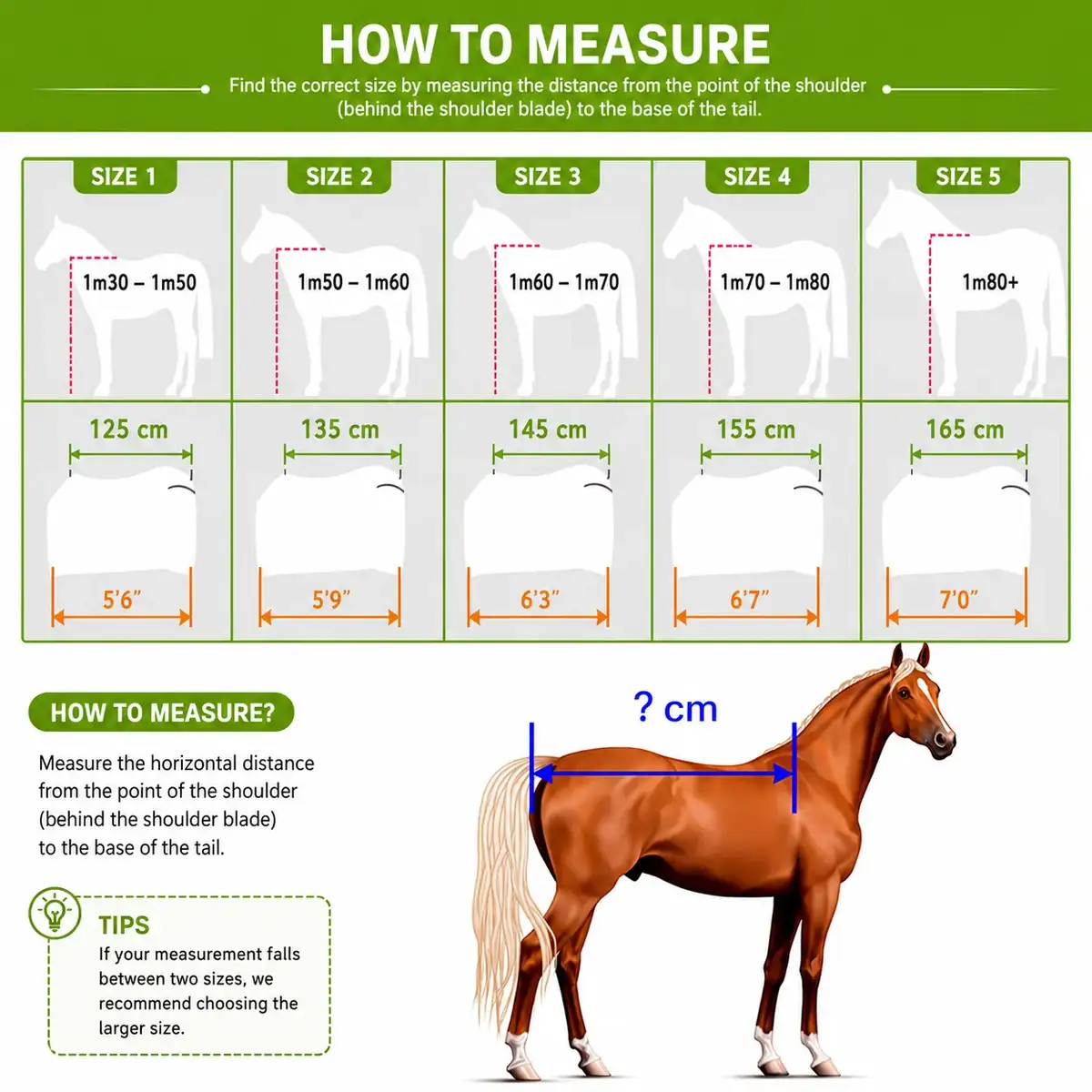
Begin with a repeatable body measurement
Stand the horse square on level ground and use a soft measuring tape. A common blanket method begins at the centre of the chest, follows the widest part of the shoulder and body, and finishes at the point of the buttock. Keep the tape level and close to the body without pulling it tight.
Record the measurement and the method. A number without a defined start and finish point can be interpreted differently by an owner, retailer, brand and factory.
Do not mix size systems without a conversion policy
Horse rug markets use inches, feet and inches, centimetres, or brand-specific size labels. A nominal size is therefore not enough for product development. The brand should state the measurement method, finished garment measurements, grading rule and permitted tolerance.
Keep one table that connects body measurement, sales size, finished back or body length, chest adjustment range, rug depth and key strap positions.
Check the finished fit at the main pressure and movement points
Fasten the rug as intended and check the chest, shoulder, wither, neck opening, body depth, hindquarter coverage and tail-flap position. Surcingles and leg straps should secure the product without hanging dangerously or restricting movement.
Observe the horse standing and moving. A rug that appears correct in a still photograph may pull backwards, slip sideways or create pressure after walking, grazing or lying down.
Understand why the measured size may still fit differently
Two horses with the same chest-to-buttock measurement can differ in shoulder width, neck set, wither shape, body depth and hindquarter build. Rug cut, neck profile, gusset geometry and chest closures affect how the same labelled size sits on those horses.
This is why owners should use a brand's fit guidance, and why brands should fit-test more than one representative body type before approving a size range.
Translate fit feedback into factory-ready information
For private-label development, send marked photographs, the horse's body measurement, the sample size and a specific observation. “The rug is too small” is less useful than “the chest closes at the last hole and the front edge pulls behind the shoulder by 30 mm when walking.”
Keep each sample round linked to an updated measurement table and comment log. Before bulk production, confirm the approved size, grading, tolerance, closure adjustment and all fit-related construction details.
Horse-care reference: the British Horse Society emphasises checking rug fit and the risk of rubbing from an ill-fitting rug; PetMD also describes the common chest-to-buttock measuring method. Individual fit and welfare should be assessed on the horse.
© 2026 Guangzhou Gugoo Pet Products Factory All rights reserved. This article may be linked to with attribution but may not be reproduced, translated, republished or used for commercial training without written permission.